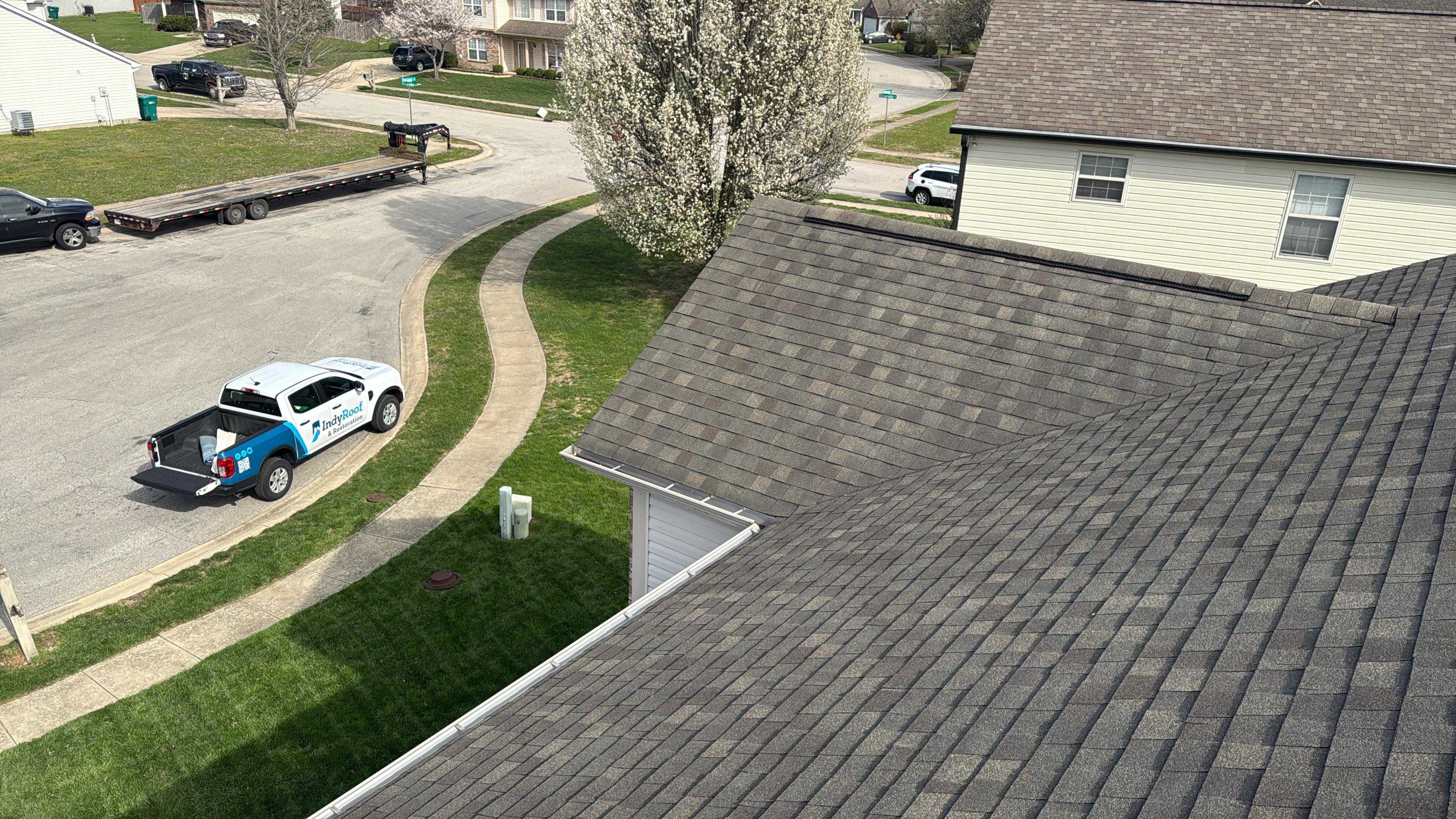
What Is Actually Growing Up There
Those black streaks almost everyone blames on dirt or mildew are usually a blue green algae called Gloeocapsa magma. It feeds on the limestone filler that manufacturers blend into asphalt shingles, which is why it shows up on roofs that are otherwise in good shape. Algae prefers the north slope because that side stays damp longer, and it spreads by airborne spores, which is also why you will often see the same streaking pattern repeating on every third or fourth house down the block. It is cosmetic in the early stages, but if it sits there for years, it can hold moisture against the shingle surface and accelerate granule loss, which is the part that matters structurally.
Moss is a different animal. Where algae is flat, moss is three dimensional and genuinely destructive. It roots into the gaps between shingles, lifts the edges, and traps water in places water should never sit. By the time moss is thick enough to see from the ground, it has usually been working on your roof for two or three seasons. Lichen, the crusty patches that look almost painted on, is the toughest of the three. It is a symbiotic mix of fungus and algae that bonds chemically to the shingle surface, and it does not come off with a garden hose no matter how long you stand out there.
Homeowners in Fillmore often ask why the streaking seems to have appeared overnight, and the honest answer is that it did not. Algae colonies have been establishing on that roof for years, but they only become visible once the biomass is thick enough to darken the surface in contrast to the clean granules around it. Once you can see it from the driveway, the colony is mature. That same principle applies to moss, which spends its first season as a faint green haze before it thickens into the mounded clumps people eventually notice. Knowing what stage the growth is in changes the recommendation, because early intervention is almost always cheaper and less invasive than waiting until the roof looks truly neglected.
The Cleaning Methods That Work, and the One That Ruins Roofs
If you remember nothing else from this article, remember this: do not let anyone pressure wash your asphalt shingles. Ever. A pressure washer will strip the protective granules off the surface in minutes, and once those granules are gone the asphalt underneath starts cooking in the sun. We have inspected roofs in Fillmore that were eight years old and looked twenty because a well meaning homeowner or a cheap cleaning service hit them with a 3,000 PSI wand. At that point you are not cleaning the roof, you are just speeding up the need for a full roof replacement.
The method that actually works is called soft washing. A low pressure application of a sodium hypochlorite solution, mixed at the right ratio and rinsed properly, will kill algae, moss, and lichen at the root without touching the shingle surface. The black streaks often fade within a few rain cycles as the dead organism washes away. For heavy moss, a pre treatment combined with gentle manual removal of the thickest clumps is the right call. The Asphalt Roofing Manufacturers Association has endorsed this approach for years, and it is the only method that will not void most shingle warranties.
There is a place for cleaning yourself if you are comfortable on a ladder and the growth is light. A 50/50 mix of household bleach and water, applied with a pump sprayer on a cool cloudy day, will knock down most algae. Protect the landscaping below, rinse the siding when you are done, and do not walk on wet shingles. If the roof is steep, if there is active moss, or if you are not certain about the shingle condition underneath, hire it out. This is not a job worth a trip to the emergency room.
Timing matters more than most people realize. A cleaning done in the late spring or early fall tends to hold up longer than one done in the middle of summer, because the cooler air keeps the cleaning solution on the surface longer before it evaporates, giving it time to work through the full depth of the colony. We also avoid windy days for obvious reasons, since overspray can damage painted trim, kill ornamental plants, and create an unpleasant situation with the neighbor whose car is parked in the adjacent driveway. A careful Fillmore Roofing crew will tarp the foundation plantings, pre wet the lawn so the runoff dilutes immediately, and walk the property afterward to rinse anything that caught drift.
Prevention Is Cheaper Than Cleaning
Once a roof has been cleaned, the best long term defense is a pair of zinc or copper strips installed just below the ridge cap. When it rains, trace amounts of metal wash down the slope and create an environment algae simply cannot establish in. It is an old trick, and it works. You can see it in action on any roof with a galvanized chimney flashing, where there is always a clean stripe running down from the metal. New shingles often come with algae resistant copper granules baked in, and if you are already thinking about replacement, it is worth asking about that feature specifically during your free roof inspection.
Trimming back overhanging branches helps more than people expect. Shade and trapped moisture are what algae and moss need to thrive, so opening the canopy and letting the sun hit the roof for a few hours a day changes the math. Keeping gutters clean matters too, because a clogged gutter backs water up under the first course of shingles and creates exactly the damp environment moss loves. If you are already on a fall gutter and roof maintenance routine, you are probably ahead of most of your neighbors without realizing it. Attic ventilation plays a quieter role in the same equation, because a roof deck that dries quickly after rain is a roof deck that resists biological growth, and most homes in Fillmore have at least one ventilation deficiency that a quick inspection will turn up.
When Cleaning Is Not Enough
Sometimes we get on a roof to assess it for cleaning and find that the algae was only the surface problem. If the shingles are curling, if granule loss has already gone too far, if the mat is showing through in patches, cleaning will not save the roof. It will just delay the conversation. In those cases we tell homeowners the truth, which is that any money spent on restoration at that point is money wasted, and the better move is to plan a replacement on your timeline rather than after a leak forces the issue. That is also why we do not upsell cleanings. If your roof does not need replacement, we will tell you, and if a soft wash will get you another five or seven years, that is the recommendation you will get.
It is worth being honest about the stakes, which sit between cosmetic and structural. Left alone, algae and moss will not collapse a roof, but they will dull its appearance, drag down curb appeal, and shave years off the shingles by degrading the granules that protect them. Cleaned and prevented, a Fillmore roof keeps its look and reaches its full service life. The decision is rarely urgent, but it is real, and the cheapest version of it is the gentle treatment done before moss has had years to lift the shingle edges and trap moisture against the deck.